
Question
Recently one of the streamers I follow posed a question,“Chat, do you ever think about what percentage of volcanic eruptions is plastic?” They further ponder on how much plastic could be in Earth’s Mantle? Plastic can be found at the bottom of the ocean, and in theory could find its way into Earth’s Mantle from tectonic plate movements. It would not be a far stretch to assume plastic could enter magma chambers. A good question would be if plastic is forced into magma chambers, can it survive in any meaningful existence?
Can Plastic Survive in a Volcano?
Magma Temperature
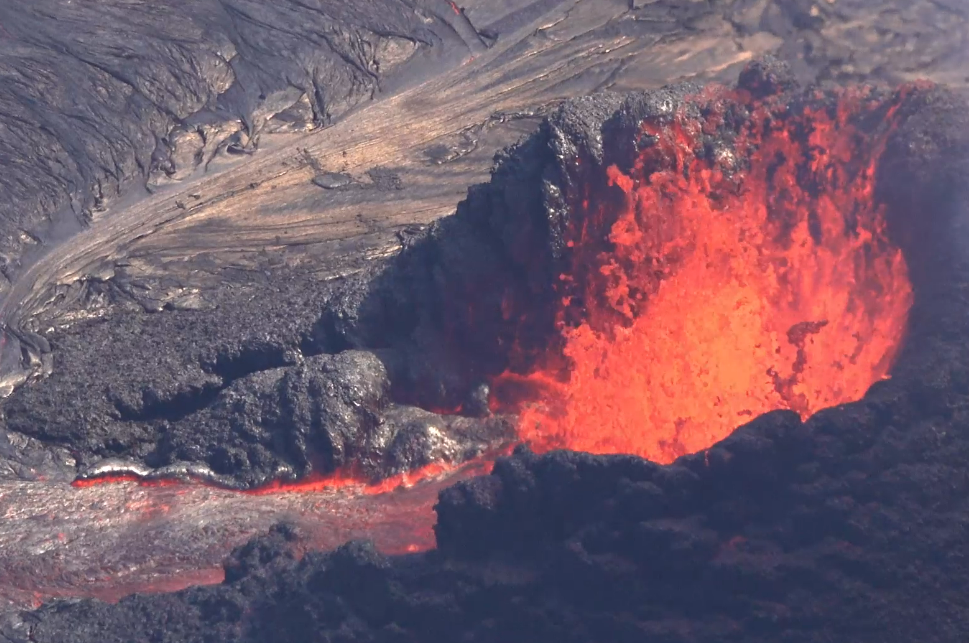
From National Geographic, Magma has different temperatures based on its composition. Rhyolitic magma has the lowest temperatures, from 650C to 800C. But magma can have temps up to 1200C. Now what about lava? Fresh lava will keep the magma temps to start with. Upon contact with the air and water lava will start cooling. In researching this, lava does not have a set time to solidify. This is because lava’s solidification time depends on its composition and thickness. The ambient temperature of the air also plays a role in how fast lava will cool. Volcanoes located in Iceland would cool faster than Volcanoes found in Hawaii. Cold air has access to the vents, and when it erupts the temperature difference would cool down the lava faster compared to an eruption in a temperate climate.
Lava Temperature
Since plastics are of many different types, researching at what temp plastic degrades vs melting is hard. I will cover what plastic oceans dubs the 7 types of plastic.
PET Plastic
From my understanding of this paper, the authors researched at what temperature PET plastic would degrade, or have its chemical bond broken. They found that at about 400°C PET would decompose into acetaldehyde(ethanal) and anhydride.
HDPE
Researchers have found that HPE when heated at 1C/minute starts to decay around 400C. During their testing HPE fully degraded at 423C. When they heated the HPE at 10C/minute they noticed that degradation started at 415C and completely degraded at 492C. They deduced that the heating rate of the sample would play a role in what temperature HDPE would melt at.
PVC
A study found that in a vacuum, PVC started to degrade at 200C, and completely degrades at 500C. This is an interesting study, but volcanoes are not vacuums. If we want to run with PVC melting temperature instead, PVC melts at 85C.
LDPE and PP
A study found that LDPE degradation temperature range is from 370C to 510C. LDPE melts at 113C. PP degrades from 245C to 493C. PP also melts at 167C.
Polystyrene
Polystyrene was found to start degrading at 270C, and completely degrades at 425C.
Quick Comparison Table
| Plastic | PET | HDPE | PVC | LDPE | PP |
| Temperature for Degradation | 400C | 400C - 423C (This depends on the thermal heating per minute) | 200C - 500C | 370C - 510C | 245C - 493C |
What happens when plastic is melted or burned?
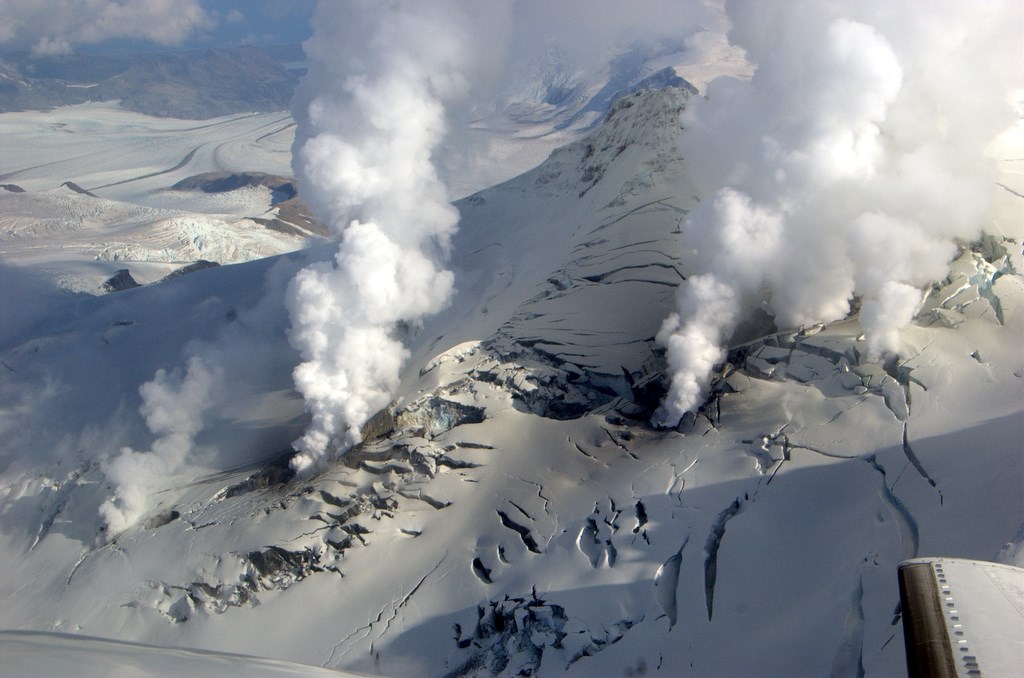
The NIH says that burning plastic could release microplastics, bisphenols, and phthalates into the air. All of these gasses could be trapped within the volcano waiting to be released during an eruption. Now volcanoes do not just hold all this gas, as volcanoes would become even more dangerous when they erupt. Just think of a pressure cooker exploding, but imagine it is instead a mountain. Volcanos have ways to release this pressure buildup without exploding, through volcanic vents and fumaroles. These two methods are different, volcanic vents would allow any form of material to escape from the volcano, whereas fumaroles expel only gasses and vapors. Fumaroles temperature would have to be enough to expel steam. The USGS states that fumaroles range from boiling to 400C. I imagine that fumaroles could have an even higher temperature limit.
Microplastics in volcanoes?
If we want to say that there is plastic in our volcanoes, fumaroles or gas vents seem to be the best bet. Fumaroles if we continue with 400C being our max limit would allow plastic to degrade to a point where it would melt or become microparticles. Once expelled from the fumarole it would cool down and fuse with the surrounding rocks, or exist within the steam and air in the case of microplastics. These plastics could end up in these vents for a variety of reasons, but most likely from tourists.
What about in volcanic vents, where lava comes out? Due to the extreme temperatures, I would conclude that plastic would not survive in much meaningful form.
Now we could have some vents from volcanoes spewing out microplastics. I have not found any studies where anyone has found traces of microplastics or other gasses released by melting plastic expelled from vents or fumaroles. Hopefully this means that plastic has not ended up in volcanoes, or if they do they are degraded to a point where they do not exist in any meaningful capacity. To crush our hope a little, there are studies which found evidence of microplastics in volcanic basin lakes.
Plastic rocks from lava flows?
So if we cannot get plastic from a volcano, can lava flow create these plastic rocks? This would be caused from the residual heat from lava or directly from it while it is cooling. We have a couple paths of research, plastic on beaches and improperly disposed of garbage
Plastic on beaches
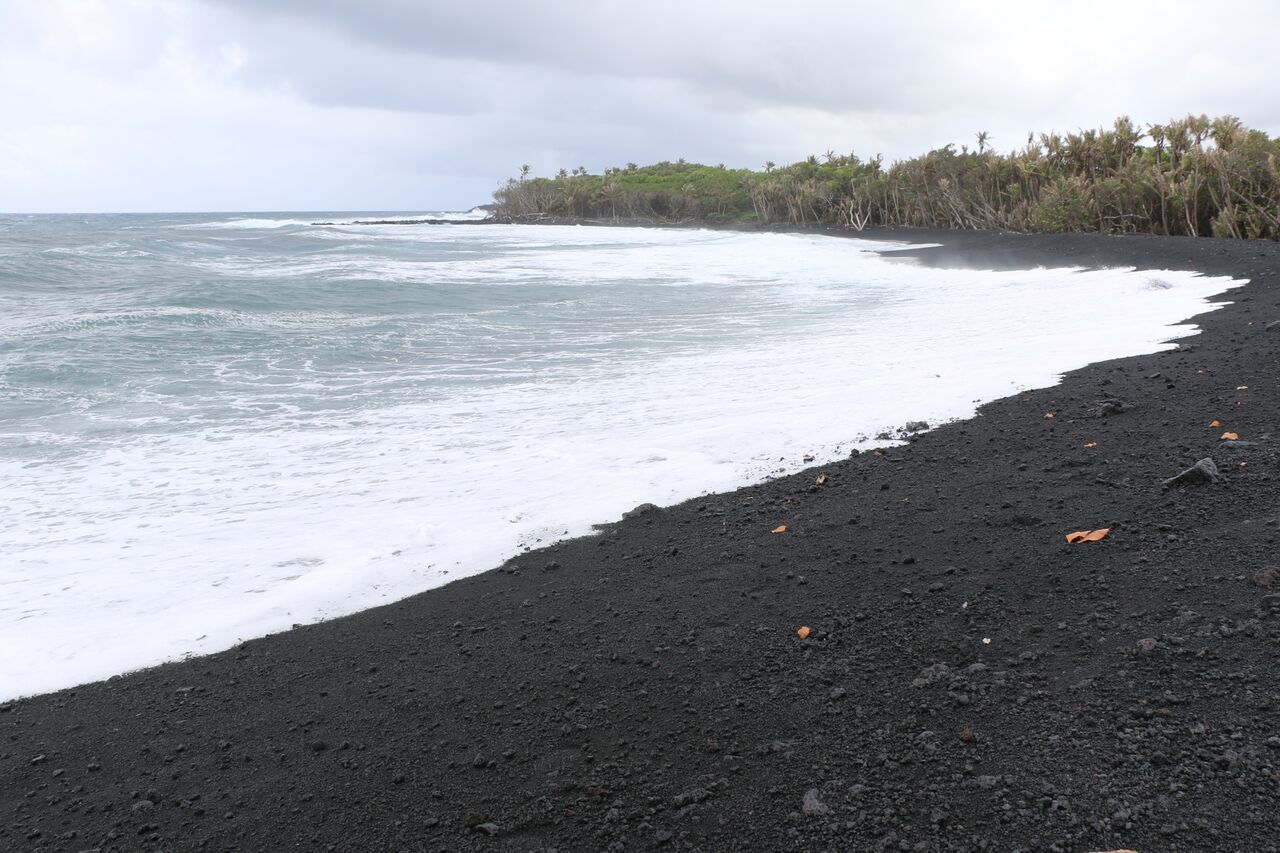
We have a concerning amount of plastic washing up on beaches, and a student, Nic Vanderzyl, studied a beach called Pohoiki in Hawaii where plastic washed up and published a research paper on this topic. This beach is known for its black sand, which is just fragments of volcanic basalt flung onto the beach from lava explosively cooling when it contacts the ocean.
This beach with its unique coloring, can help us more easily imagine just how much plastic is being washed ashore every day. All it would take to fuse this plastic would be the lava flow heating it just enough with the surrounding rocks. There was actually an article published where India found some plastiglomerates washed ashore on their beaches. They believe that most of this came from illegal plastic burning, or beach campfires.
Lava Plastiglomerates
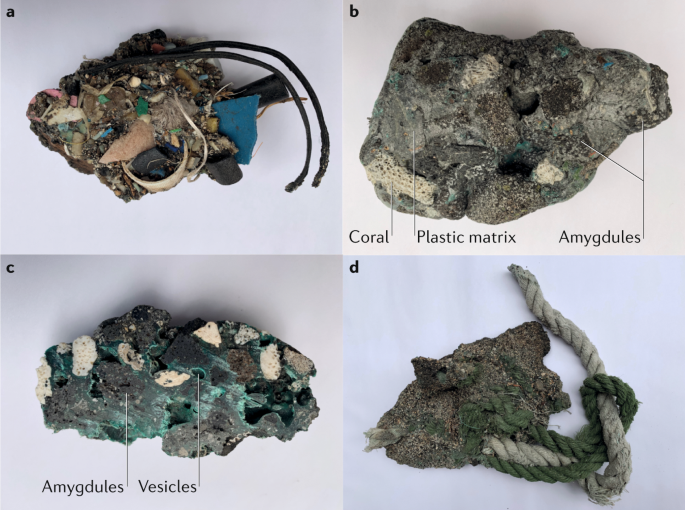
Another path we can look at is when lava comes into contact with plastic debris. This plastic debris could be from improper disposal, or exist in man-made structures which are in the path of lava flows. This plastic would be called plastiglomerates, where plastic would fuse with rock or other material and then harden.
Conclusion
Plastic surviving in a volcano seems to be pretty hard, due to the extreme temperatures at play in one. Plastic’s thermal degradation point would put it under what the lowest temperatures magma and fresh lava could exist at. Plastics could fuse and melt with the surrounding rocks near fumaroles, and could potentially expel microplastics. Having plastiglomerates form from lava, would seem to only be possible from the ambient temperature of the lava flow.
Cool Things
I found a video where some person throws something into a volcano. People say that it is garbage and or organic waste or a backpack. I am unsure but the way the lava reacts is insane, and I hope you think so too.